In-process control during chemical synthesis of ergoline psychedelics by HPTLC

This HPTLC case study demonstrates a rapid way of in-process control during chemical synthesis.

Introduction

HPTLC is a powerful technique enabling high sample throughput capacity, short analysis time, and low operating costs. Our case study demonstrates a rapid way of in-process control during chemical synthesis.

Challenge

Commonly used chromatographic techniques require a time- and cost-intensive sample preparation step. In many cases HPTLC allows one to analyze several samples side-by-side with little to no sample preparation. The progress of a reaction during a chemical synthesis and of purification can easily be monitored by comparing samples on the same plate side-by-side.

Description of the procedure and documentation

All samples are directly applied from each step of the chemical synthesis without sample preparation on an HPTLC plate (silica gel 60 F254). The visionCATS method file is opened and executed, creating a new analysis file. In this visionCATS analysis file the sequence table is completed (Vial ID, description of samples and references, and selection of the rack position of each vial). An image of the clean plate under UV 254 nm is captured with the TLC Visualizer. The samples and standards are applied bandwise onto the HPTLC plate using the Automatic TLC Sampler 4 (ATS 4), which guarantees precise and reliable application. Then the HPTLC plate is developed using the Automatic Developing Chamber 2 (ADC 2) allowing for reproducibility between plates. For visualization the plate is documented with the TLC Visualizer under UV 254 nm and UV 366 nm. Spectra from 200 to 500 nm are recorded with the TLC Scanner 4 and visionCATS. The purified product zone of interest is eluted with the TLC-MS Interface 2 and confirmed by HPTLC-MS.


  • img1

    01

    Synthesis of ergoline psychedelics: In a first step the lysergic acid (LysS) is produced with ergotamine as the starting material. Then the formation of the amide takes place, with e.g. LSP (Lysergic acid 3-pentyl amide) as finished product.

  • img2

    02

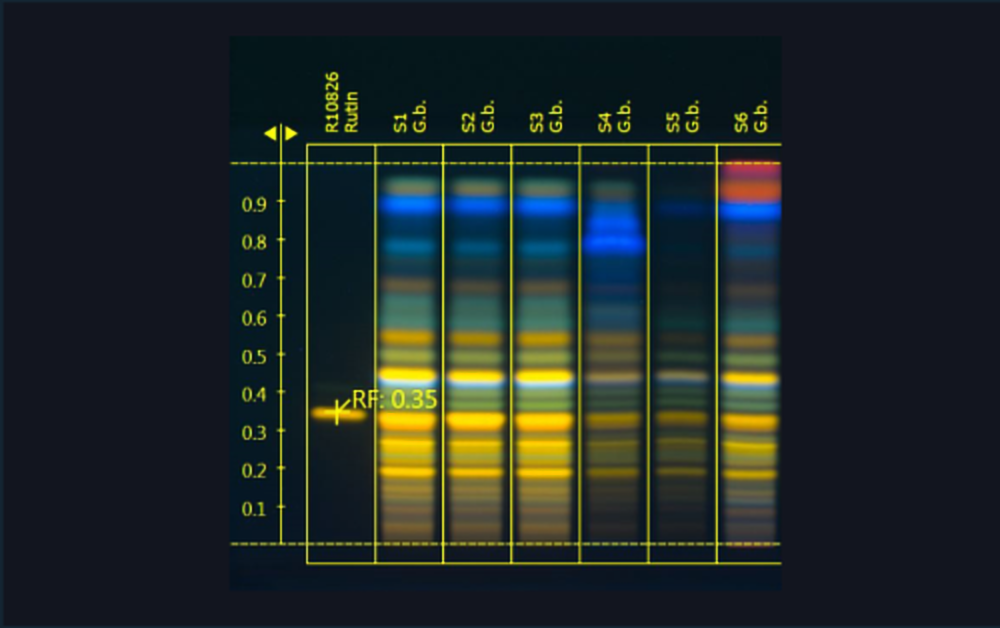
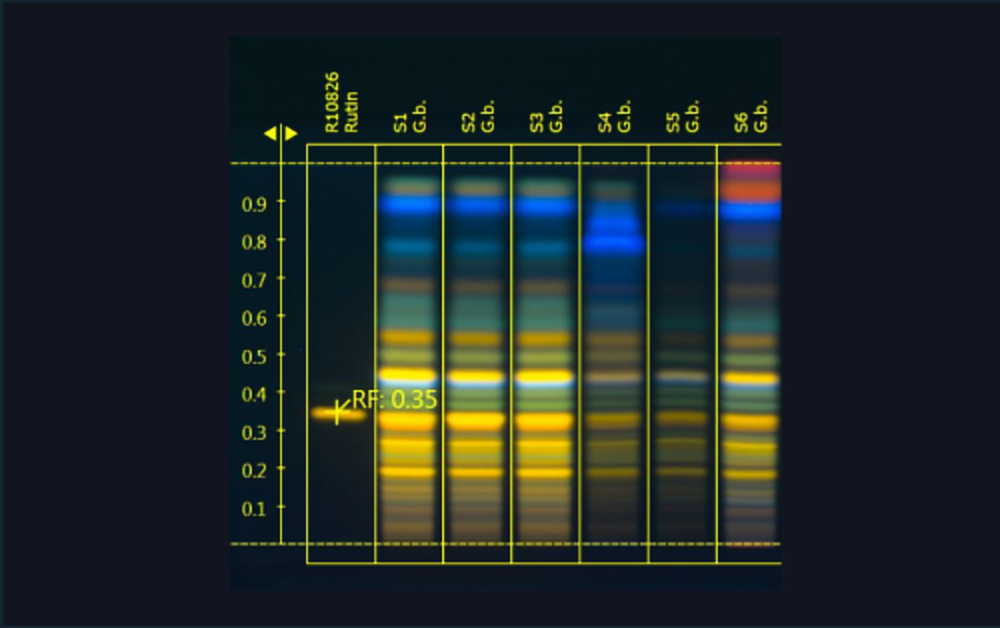
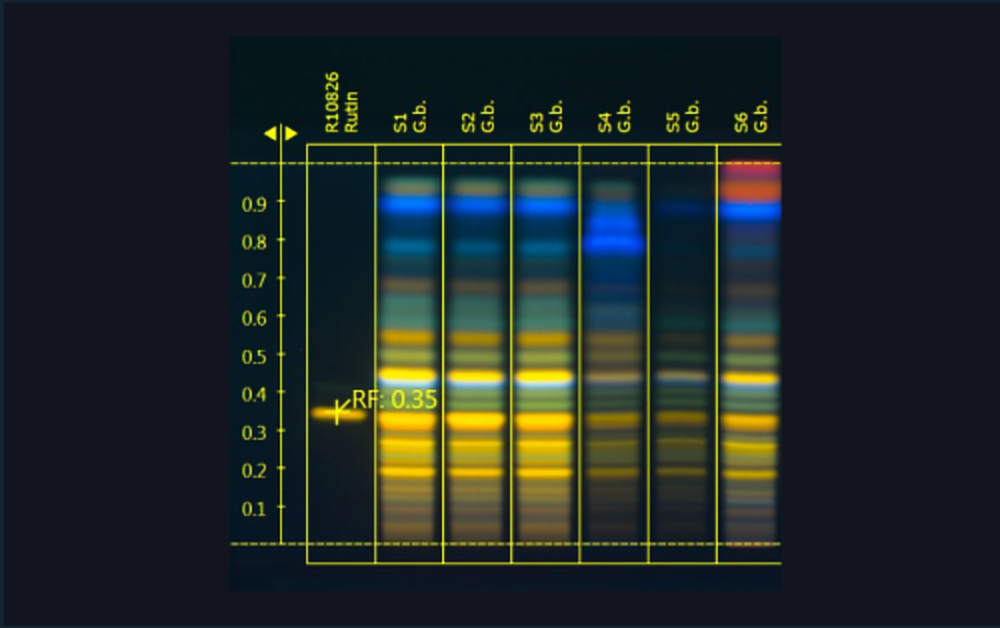
    Images of the results: Chromatogram under UV 254 and UV 366 nm, UV spectra and mass spectra of LSP (finished product)

Benefits of using modern HPTLC for the analysis of drugs

    • HPTLC is suitable as a high throughput and low cost technique for the analysis of drugs.
    • HPTLC is used for determination of purity and for stability studies (shelf life).
    • HPTLC allows the separation of several samples in parallel on one plate and is therefore excellently suited for process monitoring.
    • HPTLC visualizes the similarities and differences between samples at a glance on a plate (e.g. to monitor up- and downscaling processes) and by using the software visionCATS to even compare between plates created years apart.
    • HPTLC-MS is a fast way for substance confirmation.

    mentioned products

    The following products were used in this case study

    Continue reading

    Determination of monoacylglycerides in biodiesel

    This case study demonstrates a reliable characterization of impurities in biodiesel (according to UNE EN 14214:2013) and additionally presents the concept for identity confirmation of monoacylglycerides by mass spectrometry, which allows for origin identification.

    Introduction

    HPTLC is a powerful technique with high sample throughput capacity, short analysis time, and low running costs. This case study demonstrates a reliable characterization of impurities in biodiesel (according to UNE EN 14214:2013) and additionally presents the concept for identity confirmation of monoacylglycerides by mass spectrometry, which allows for origin identification (e.g. vegetable, animal, waste cooking oil).

    Challenge

    Often chromatographic techniques require time- and cost-intensive sample preparation steps. However, in many cases HPTLC allows to analyze samples after a minimal sample preparation (e.g. dissolving) in combination with the separation of several samples side by side on the same plate. Quantification of the separated compounds is possible by densitometry using the CAMAG TLC Scanner. In addition, the identity can be proven by eluting the spot of interest using the CAMAG TLC-MS Interface and coupling it to any commercially available mass spectrometer.

    Description of the procedure and documentation

    Sample and standard preparation are performed according to Cebolla et al. (CBS 114, p. 5-7). All parameters (conditions for sample application, chromatogram development, and evaluation) are logged into the winCATS software, which controls all major CAMAG instruments required for the HPTLC analysis. The samples and standards are applied band-wise onto the HPTLC plate using the ATS 4, which guarantees precise and reliable application. Then the HPTLC plate is developed using the AMD 2. For the analysis of monoacylglycerides the developed plate is dipped into primuline reagent. For quantification each track is scanned in fluorescence mode at 366/>400 nm with the TLC Scanner and evaluated with winCATS software. If further investigations of separated sample components are of interest, their eluted zones can be analyzed with other techniques like MS, NIR, and NMR (off-line hyphenation).


    • Densitogram comparison of B5 (red) and B20 (blue)

      01

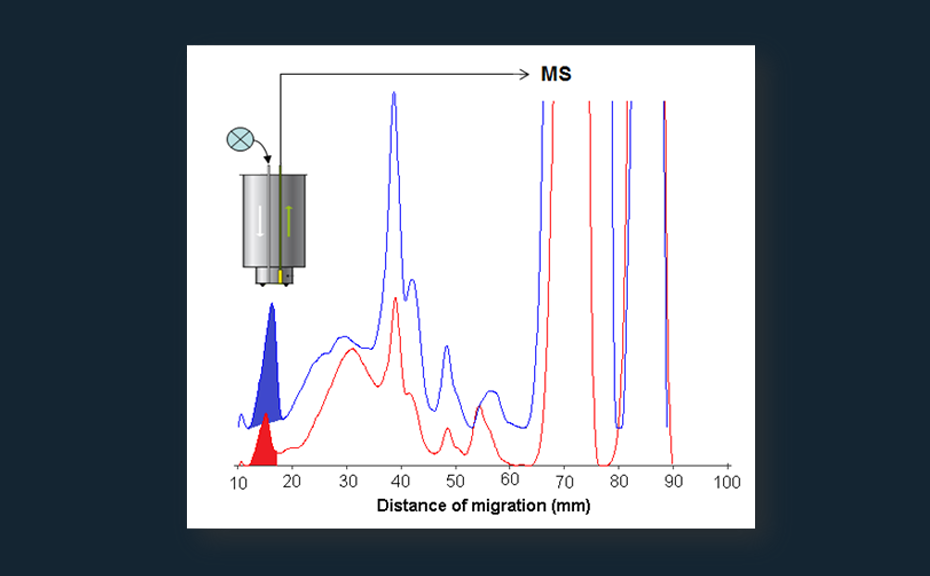
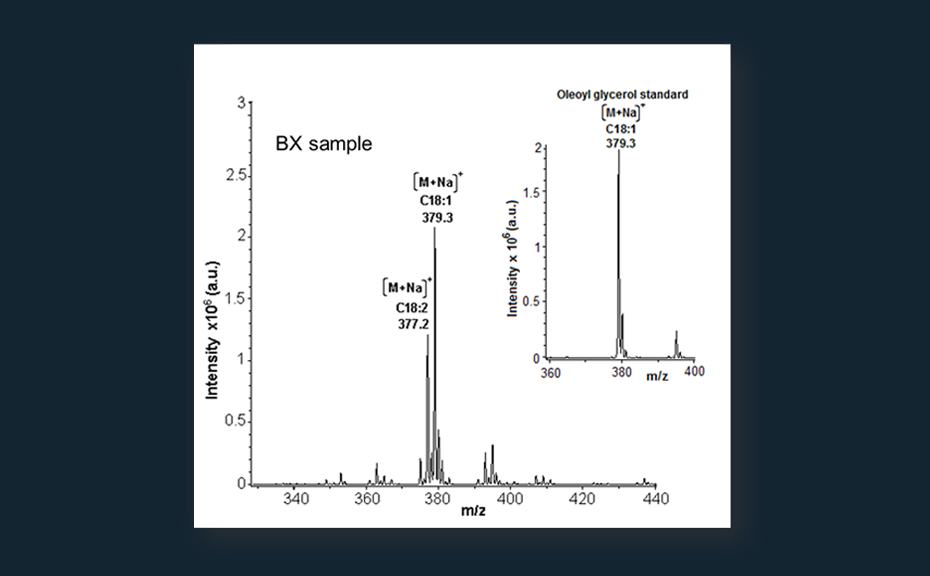
      Densitogram comparison of B5 (red) and B20 (blue), both 5000 μg/band: monoacylglyceride bands at 16 mm were eluted via the TLC-MS Interface into the ESI-MS

    • Polynomial calibration curve of the 1-oleoyl glycerol standard

      02

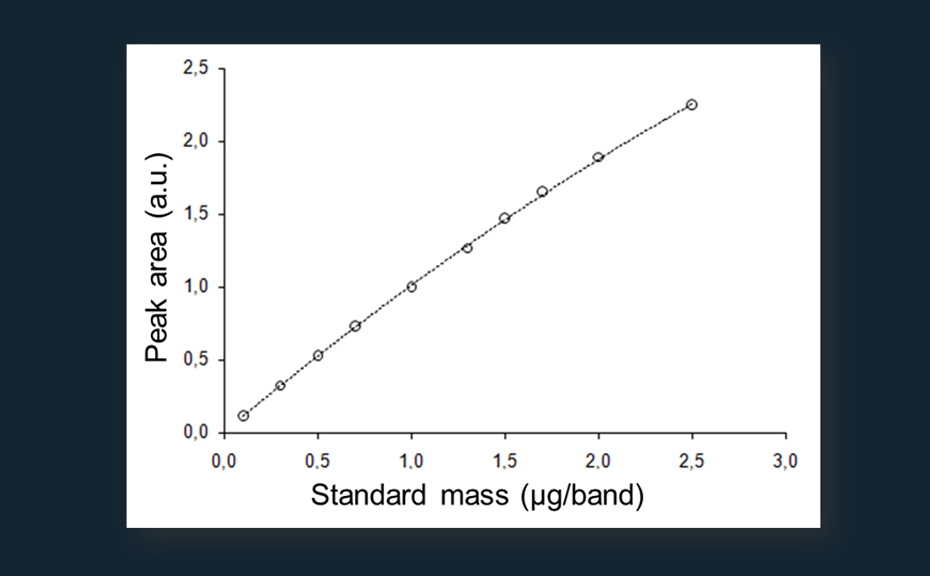
      Polynomial calibration curve of the 1-oleoyl glycerol standard (y = -0.070 x2 + 1.077 x + 0.006; r2= 0.999)

    • HPTLC-MS full scan mass spectrum of monoacylglycerol zone

      03

      Online monitoring of the purification process by LC-UV (254 nm, left) versus offline by HPTLC-UV (individual fractions at 254 nm, right)

    Benefits of using modern HPTLC for industrial applications

      • HPTLC can be used as high throughput and low-cost technique for a broad variety of analytical tasks in industrial applications settings.
      • By using internal or external chemical reference standards compounds can be quantified precisely with the TLC Scanner.
      • The entire sample is detectable on the plate and allows evaluation of all components even if some of them remain at the application zone or migrate in the solvent front.
      • HPTLC can analyze samples with high matrix content due to the disposable stationary phase.
      • Thanks to the non-destructive nature of the chromatographic method, analytes can be eluted after separation from the plates using the CAMAG TLC-MS Interface and analyzed by hyphenated techniques (e.g. MS, NIR, NMR).

      This work was done at the CSIC, Instituto de Carbochímiqa, in Zaragoza, Spain. We are grateful to Prof. Dr. Vicente Cebolla and his team for the excellent collaboration!

      mentioned products

      The following products were used in this case study

      Continue reading

      Discover estrogens by HPTLC

      This case study demonstrates a new way of non-target screening for estrogen active compounds in food samples or water.

      Introduction

      HPTLC bioautography links an effect to a separated compound from a complex mixture (non-target screening). By the use of RP-18 W stationary phases (wettable with water) large volumes of aqueous samples can be applied resulting in sharply-bounded zones. HPTLC bioautography offers a great option with regard to a high sample throughput capacity at low running costs. This case study demonstrates a new way of non-target screening for estrogen active compounds in food samples or water.

      Challenge

      Endocrine active compounds (EACs) are ubiquitous in food. They have impact on human health by controlling and regulating essential functions of metabolism, growth and development. Endocrine active compounds include natural estrogens, phytoestrogens as well as food contaminants like plasticizers, pesticides and biocides. To detect all EACs specific non-target screening methods are needed. The planar Yeast Estrogen Screen (pYES) offers a very sensitive way to analyze known and unknown EACs in various sample matrices.

      Description of the procedure and documentation

      The yeast is cultivated according to Klingelhoefer and Morlock (2015). For the HPTLC analysis the samples (in the case shown e.g. beer) are degassed by sonication and 750 µL of each beer sample is mixed with 750 µL of methanol. After centrifugation for 5 min the supernatant is transferred to vials. In the first step an image of the clean RP-18 W HPTLC plate is captured under white light and UV 254 nm with the CAMAG TLC Visualizer. 300 µL of each sample are applied in form of a rectangle (10 x 30 mm) onto the HPTLC plate using the CAMAG Automatic TLC Sampler 4 (ATS 4) to spread the huge beer matrix over a large adsorbent area. Then the HPTLC plate is developed in 3 steps using the Automatic Developing Chamber 2 (ADC 2). The first two steps are for focusing the applied sample (front elution of the analytes) with isopropyl acetate up to 35 mm, followed by the development with n-hexane – toluene – ethyl acetate 6:3:4 up to 70 mm. An image of the developed plate is captured under UV 254 nm, UV 366 nm and white light. In the next step, the developed plate is dipped with the CAMAG Chromatogram Immersion Device 3 into the yeast culture. The plate is kept humid and incubated at 30°C for 3 h. After that, the plate is dipped into the substrate solution and incubated at 37°C for 1 h. The evaluation is done under UV 366 nm. The active zones are further analyzed by HPTLC-MS. Zones are directly eluted with CAMAG TLC-MS Interface to an ESI-MS for confirmation.


      • Image of estrogen active compounds in the different beer samples under UV 366 nm

        01

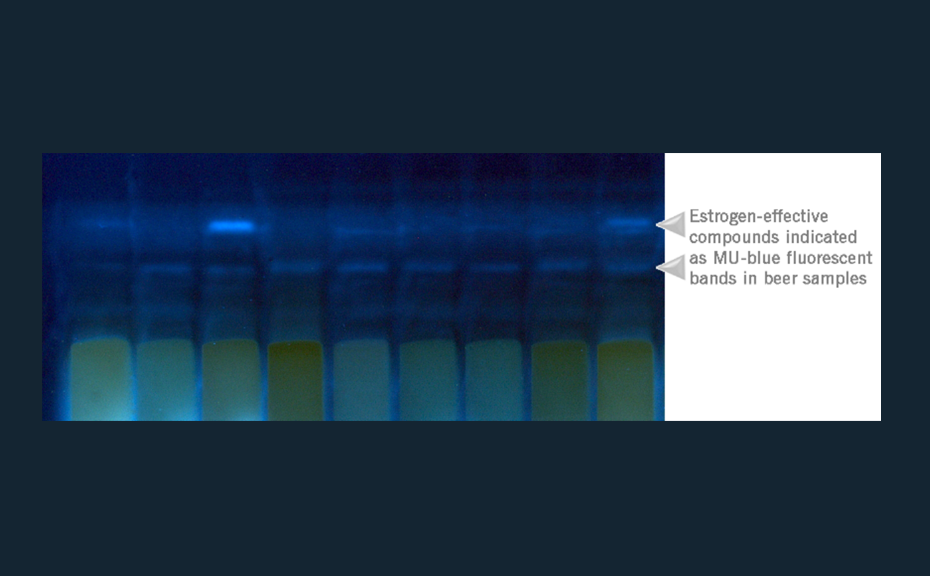
        Image of estrogen active compounds in the different beer samples under UV 366 nm

      • HPTLC-MS full scan mass spectrum of eluted estrogen active zone with the expected mass m/z 339 [M-H]-

        02

        HPTLC-MS full scan mass spectrum of eluted estrogen active zone with the expected mass m/z 339 [M-H]

      Benefits of using modern HPTLC for the analysis of food samples

        • HPTLC bioautography couples effect-directed analysis with chromatography which allows non-target screening
        • HPTLC bioautography can be used for screening several samples side by side
        • pYES detects EACs down to the very low µg/kg range (for some even down to the ng/kg range)
        • pYES is a specific detection method for the substance class of EACs
        • With HPTLC-MS the presence of known estrogens can easily be confirmed

        mentioned products

        The following products were used in this case study

        Continue reading

        HPTLC quantification of cocoa ingredients and their changes during different chocolate manufacturing steps

        The Institute of Food and Beverage Innovation of the Zurich University of Applied Sciences in Wädenswil deals with delicious, healthy, safe and sustainable food. Besides the education of food technology engineers, practical work with the food industry is fundamental to its strength in innovation. The research group, Food Chemistry analyzes food ingredients using different analytical techniques like HPLC-MS, FT-IR and HPTLC-MS. One of the research objectives is the determination of secondary plant metabolites like alkaloids and polyphenols in food. Monitoring the changes through the entire value chain is of primary importance. In this study, determination of secondary metabolites was performed on fresh cocoa beans and diverse intermediate products of the chocolate production process.

        Introduction

        Polyphenols are not only known for their astringency but also for their great antioxidant potential. They are found in large amounts in cocoa and its derived product chocolate. The characterization and determination of high molecular oligomeric proanthocyanidins (PA) are of great interest because of their higher antioxidant activity compared to low molecular monomeric flavan-3-ols [1]. The changes of the PA profile are also essential for the organoleptic evaluation, which shows that monomeric PAs are more responsible for the bitter taste in contrast to oligomeric PAs, which are responsible for the astringency. Also of great interest are the two alkaloids caffeine and theobromine, not only because of their bitter taste but also for their stimulating and “prime pumping” effect. Anthocyanins can be used as general indicator for determining the degree of cocoa fermentation.

        In the following application, HPTLC was used to determine oligomeric PAs, alkaloids and anthocyanins through the entire value chain – from fresh cocoa beans, through roasted cocoa, cocoa mass and up to molded chocolate bars. The established method has been proven as a suitable tool for comprehensive compound analysis in laboratories with high sample throughput. Besides the acquisition of the characteristic HPTLC fingerprint for the specific manufacturing step, the visual information can be used to build up an imaging database.

        Chromatogram layer

        HPTLC plates silica 60 F254 (Merck), 20 x 10 cm

        Samples

        One single batch of 10 kg fresh cocoa beans was studied across different processing steps [2]. Changes in the PA profile were recorded on a lab-scale model and may not be fully in line with real-life crop or industrial scale processing. Nevertheless, one batch was processed and aliquots of about 50 g were sampled from each processing step. Samples were collected from (1) raw fresh cocoa beans, (2) fermented, dried cocoa beans, (3) roasted cocoa mass, (4) 1 h conched cocoa mass, and (5) molded chocolate bars.

        Sample preparation

        1 g of the fine grinded and defatted cocoa powder was extracted three times with 3 mL acetone – water 1:1. The combined supernatant was diluted 1:10 with acetone – water 1:1.

        Standard solutions

        Anthocyanin standard solution (0.01 mg/mL in methanol) with cyanidin-3-O-arabinoside (cn-ara) und cyanidin-3-O-glucoside (cn-glc); alkaloid standard solution (0.2 mg/mL in acetone – water 1:1) with caffeine and theobromine; PA standard solution (0.1 mg/mL in methanol) with (-)-epicatechin (EC), proanthocyanidins B2 (PA B2) and C1 (PA C1) as well as cinnamtannin A2 (Cinn A2)

        Sample application

        Bandwise with Automatic TLC Sampler (ATS 4), 15 tracks, band length 8 mm, distance from left edge 20 mm, distance from the lower edge 8 mm, application volume between 5 and 10 μL for standard solutions and 2 and 10 μL for the sample solutions

        Chromatography

        In the Automatic Developing Chamber (ADC 2) with chamber saturation (with filter paper) for 20 min and after conditioning at 33% relative humidity for 10 min using a saturated solution of magnesium chloride, development with ethyl formate – formic acid – water – toluene 30:4:3:1.5 to the migration distance of 70 mm (from the lower edge), drying for 5 min

        Postchromatographic derivatization

        The plate was heated at 100 °C and immersed with Chromatogram Immersion Device (immersion speed 5 cm/s, immersion time 0 s) in Fast Blue Salt B reagent (140 mg Fast Blue Salt B in 140 mL methanol, 10 mL water, and 50 mL dichloromethane), followed by 30 s drying in a cold air stream. Alternatively, the Derivatizer can be used.

        Documentation

        TLC Visualizer under UV 254 nm and white light, also after derivatization

        Densitometry

        TLC Scanner 4 and visionCATS, absorption measurement at 280 nm for alkaloids and 510 nm for anthocyanins and derivatized PA, slit dimension 5.00 x 0.20 mm, scanning speed 50 mm/s, evaluation via peak area, polynomial regression, spectrum recording from 190 to 600 nm

        Mass spectrometry

        Elution of target zones was done after derivatization with Fast Blue Salt B with the oval elution head (4 x 2 mm) of the TLC-MS Interface. Hereby, acetone – water 1:1 was used as elution solvent at a flow rate of 0.1 mL/min using a HPLC pump. The recording of mass spectra was performed in the positive ionization mode.

        Results and discussion

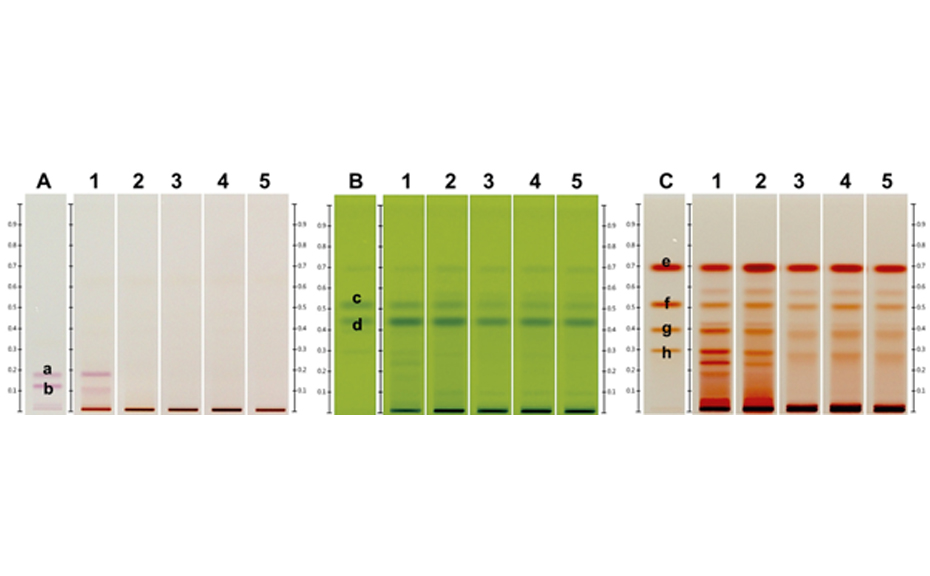
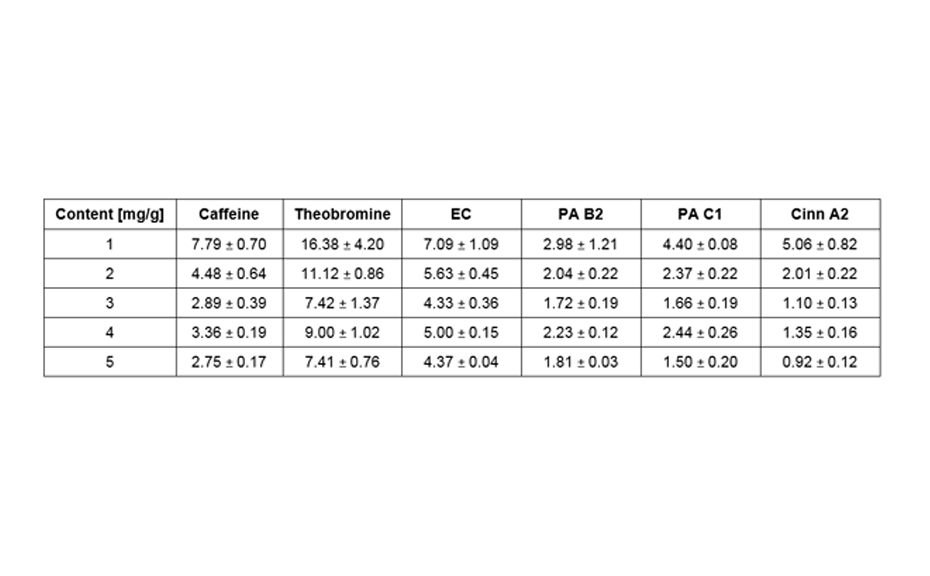
        The developed method showed a good separation and a quick quantification of the four oligomeric PAs, the two alkaloids and the two anthocyanins. The present study showed diminishing levels of the alkaloids and especially oligomeric PAs, especially during the fermentation and roasting process. Higher oligomeric PAs are presumed to decrease faster than monomeric PAs. In addition, the alkaloid content decreased throughout the manufacturing, whereas during fermentation, alkaloids may diffuse through the porous surface of the testa cotyledon [3]. During the roasting process, alkaloid content decreased due to diffusion into fat. Anthocyanins are responsible for the reddish coloring of the cotyledon. In general, the content of anthocyanins decreased constantly during all stages of fermentation and drops further during drying. Here, the initial content in fresh cocoa beans for cn-ara with 0.81 ± 0.01 mg/g and 0.40 ± 0.01 mg/g for cn-glc dropped drastically below the detection limit after six days of fermentation. The quantification allows the determination of valuable ingredients through each specific processing step and can lead to optimization of the chocolate process.


        • HPTLC chromatogram of different standard mixtures for (A) anthocyanins (a: cn-ara, b: cn-glc) illuminated under white light; (B) alkaloids (c: caffeine and d: theobromine) under UV 254 nm and (C) PAs (e: EC, f: PA B2, g: PA C1 and h: Cinn A2) under white light after derivatization as well as products from different steps of the chocolate manufacturing with 1: raw fresh cocoa beans, 2: fermented, dried cocoa beans, 3: roasted cocoa mass, 4: 1 h conched cocoa mass and 5: molded chocolate bars

          01

          HPTLC chromatogram of different standard mixtures for (A) anthocyanins (a: cn-ara, b: cn-glc) illuminated under white light; (B) alkaloids (c: caffeine and d: theobromine) under UV 254 nm and (C) PAs (e: EC, f: PA B2, g: PA C1 and h: Cinn A2) under white light after derivatization as well as products from different steps of the chocolate manufacturing with 1: raw fresh cocoa beans, 2: fermented, dried cocoa beans, 3: roasted cocoa mass, 4: 1 h conched cocoa mass and 5: molded chocolate bars

        • Polyphenol, alkaloid and anthocyanin mean content (mg/g non-fat dry matter, reproducibility inclusive sample preparation, n = 3) for products of five different chocolate manufacturing steps

          02

          Polyphenol, alkaloid and anthocyanin mean content (mg/g non-fat dry matter, reproducibility inclusive sample preparation, n = 3) for products of five different chocolate manufacturing steps

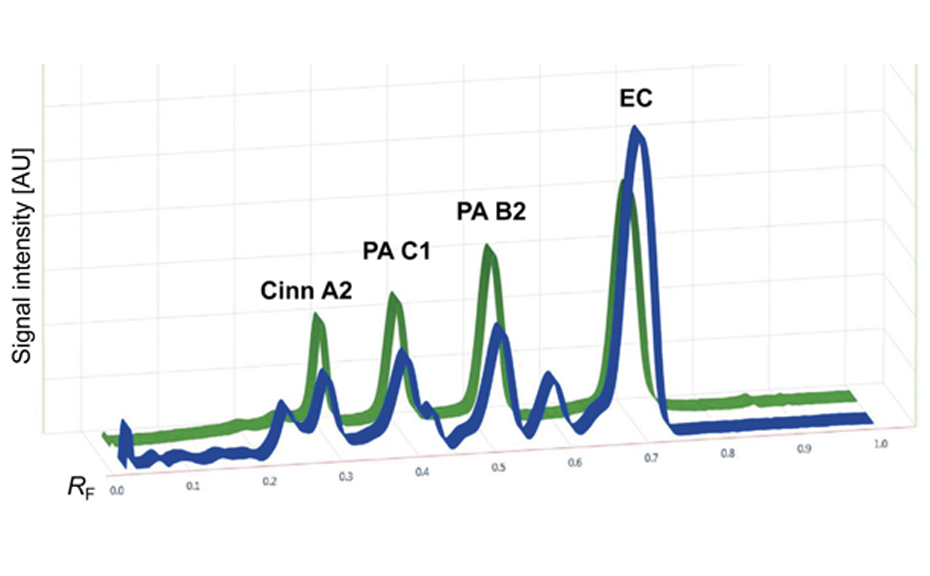
        • Densitogram of the raw fresh cocoa beans extract (blue) and PA standard solution (green), absorption measurement at 510 nm after derivatization

          03

          Densitogram of the raw fresh cocoa beans extract (blue) and PA standard solution (green), absorption measurement at 510 nm after derivatization

        Literature

        [1] Pedan, V. et al. S. Food Res. Int. 89 (2016) 890–900
        [2] Pedan, V. et al. Food Chem. 214 (2017) 523–532
        [3] Timbe, D. et al. Food Sci. 43 (1978) 560–562

        Further information on request from the authors.

        mentioned products

        The following products were used in this case study

        Continue reading

        Degradation profiling of cefixime and azithromycin (antibiotics)

        Dr. Gawande, Assistant Professor in the Quality Assurance Techniques at Sinhgad Institute of Pharmacy, Pune, Maharashtra, India, is involved in the development and validation of chromatographic methods for stability of pharmaceutical drugs, both standalone and fixed dose combinations.

        Introduction

        Stability is the capacity of a drug product to remain within specification for a given time. It is a prime requirement to ensure its identity, strength, quality and purity. Forced degradation studies are an integral part of drug development programs. For detecting the number and types of degradation products that are formed under various conditions, different chromatographic techniques in conjunction with UV and MS are used.

        HPTLC is especially beneficial for stability testing due to its disposable stationary phase, as well as in the case of forced degradation, when appreciable amounts of acidic, alkaline and peroxide reagents are used. Furthermore, HPTLC permits the analysis of a large number of samples in a short time. There are also multiple derivatization and detection options that can help to characterize degradation products. Apart from this, simplicity and low cost of analysis add to the benefits.

        Standard solutions

        10 mg of cefixime trihydrate (CEFI) or azithromycin dihydrate (AZI) dissolved in 10 mL methanol

        Sample preparation

          1. Hydrolytic degradation: 1 mL of drug standard solution was mixed with 1 mL water or 0.5 N HCl or 0.5 N NaOH, kept for 1 h at RT and neutralized with acid or base
          2. Oxidative degradation: 1 mL of drug standard solution was mixed with 1 mL of H2O2 (3 and 30 %) and kept for 1 h at RT
          3. Thermal degradation: The drug powder placed in a sealed glass ampoule was heated at 100 °C and 200 °C for 1 h and 2 h in a hot oven
          4. Photolytic degradation (according to ICH guidance Q1B, option 2): A thin layer of solid drug powder was exposed with fluorescent cold white light (1.25 million lux h) and UV light (200 Whm-2) in a photo stability chamber

          All degradation samples were dissolved (solid samples) or diluted with methanol to a final concentration of 100 μg/mL.

          Chromatogram layer

          HPTLC plates silica gel 60 F254, aluminium backed (Merck), 20 x 10 cm, prewashed by developing first with methanol and then with the mobile phase followed by drying for 15 min with cold air

          Sample application

          Bandwise application with Linomat 5 or Automatic TLC Sampler (ATS 4), 15 tracks, band length 8 mm, distance from left edge 20 mm, distance from lower edge 8 mm, application volumes 10.0 μL for sample solutions and 2.0 and 5.0 μL for standard solutions (CEFI resp. AZI); for preparative isolation: band length 180 mm and application volume 200.0 μL

          Chromatography

          In the Twin Trough Chamber 20 x 10 cm with chamber saturation (with filter paper) for 20 min, development with ethyl acetate – methanol – acetone – toluene – ammonia 2:10:14:1:1 to the migration distance of 80 mm (from the lower edge), drying for 15 min with cold air

          Postchromatographic derivatization

          For detection of AZI, the plate was immersed with the Chromatogram Immersion Device into sulfuric acid reagent (1:4 in ethanol; immersion speed 3 cm/s, immersion time 6 s), dried for 30 s with cold air, and heated at 100 °C for 5 min using the TLC Plate Heater.

          Documentation

          TLC Visualizer under UV 254 nm, UV 366 nm, and white light

          Densitometry

          TLC Scanner 3 and winCATS, absorption measurement at 235 nm for CEFI and 530 nm for AZI, slit dimension 6.00 x 0.45 mm, scanning speed 20 mm/s, spectra recording from 190 to 550 nm

          Mass spectrometry

          The target zones were marked with a pencil, and plates were cut carefully to separate different bands. Individual bands were cut and sonicated with methanol for extraction of degradation products. Methanol fractions were concentrated and evaporated to obtain solid residues which were analysed by Q-TOF and Ion Trap mass spectrometry in the positive ionization mode

          Results and discussion

          The developed method was validated according to the International Conference on Harmonization guideline Q2 (R1). All parameters were within the acceptance criteria, indicating that the method is suitable for the analysis of AZI and CEFI. In the forced degradation studies, CEFI was found to degrade to 4 major products (CI – IV) at different stress conditions. AZI showed only one additional peak (AI) upon acid and neutral hydrolysis. The specificity of the method was verified by comparing the hRF values and UV spectra of the standard solutions with the degraded samples. Peak purities were investigated by spectrum scans at three positions within each zone and calculating their correlations (peak purities between 0.9993 and 0.9997). Four degradation products for CEFI and one degradation product for AZI were isolated by preparative TLC and subjected to MS/MS for characterization. The β-lactam ring of CEFI did open under all conditions (chemical structures at [1]). AZI degraded to azithralosamine (loss of cladinose ring).


          • Densitogram (absorption measurement) at 254 nm of the standard mixture; reprinted from [1]

            01

            Densitogram (absorption measurement) at 254 nm of the standard mixture; reprinted from [1]

          • Parameters

            02

            Measured parameters

          • Degradation study of CEFI ; reprinted from [1]

            03

            Degradation study of CEFI ; reprinted from [1]

          • Degradation study of AZI; reprinted from [1]

            04

            Degradation study of AZI; reprinted from [1]

          Literature

          [1] V. Gawande et al. Acta Chromatographica, 2017, DOI: 10.1556/1326.2017.00199

          Further information on request from the authors.

          Contact: Dr. Vandana Gawande, Department of Pharmaceutical Chemistry, STES’s Sinhgad Institute of Pharmacy, Narhe, Pune – 411041, Maharashtra, India, gawandevandana848[at]gmail.com

          mentioned products

          The following products were used in this case study

          Continue reading