
Archives: Products

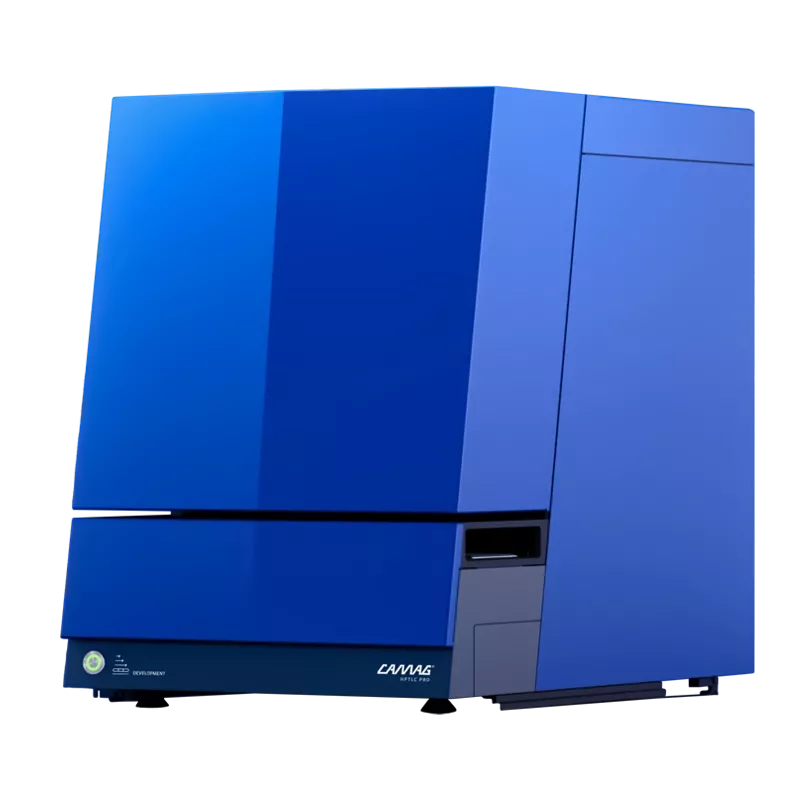
CAMAG® HPTLC PRO Module DEVELOPMENT
HPTLC PRO
Module DEVELOPMENT
CAMAG® HPTLC PRO
Module DEVELOPMENT
In a nutshell
Full Automation for Reproducible and Efficient development
[development-large]The advanced developing chamber of the HPTLC PRO Module DEVELOPMENT revolutionizes chromatography by fully controlling the gas phase, ensuring highly reproducible results, and significantly reducing pre-conditioning and activation time.
-
5
HPTLC glass plates -
3
different developing solvents

Controlled by visionCATS HPTLC Software, the Module DEVELOPMENT autonomously develops up to five HPTLC glass plates (20 × 10 cm) sequentially, using up to three different developing solvents.
-
Part of the fully automated HPTLC PRO SYSTEM
-
Development of up to 5 HPTLC plates (20 x 10 cm)
-
Supports up to 3 different developing solvents
-
HPTLC glass plates (20 x 10 cm)
-
Software-controlled by visionCATS
HOW IT WORKS
SMOOTH & PRECISE OPERATION
-
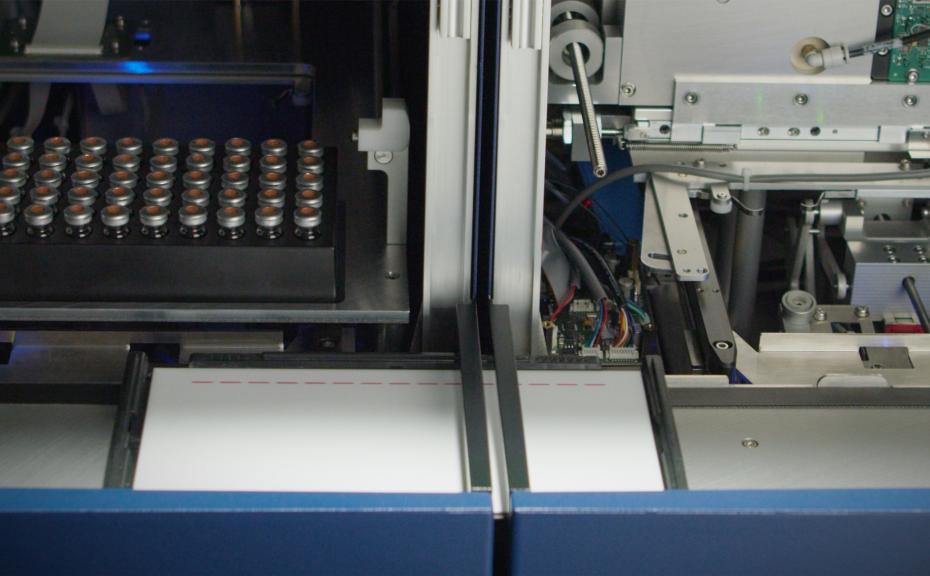
01
After application of all samples, the plate is moved to the Module DEVELOPMENT.
-
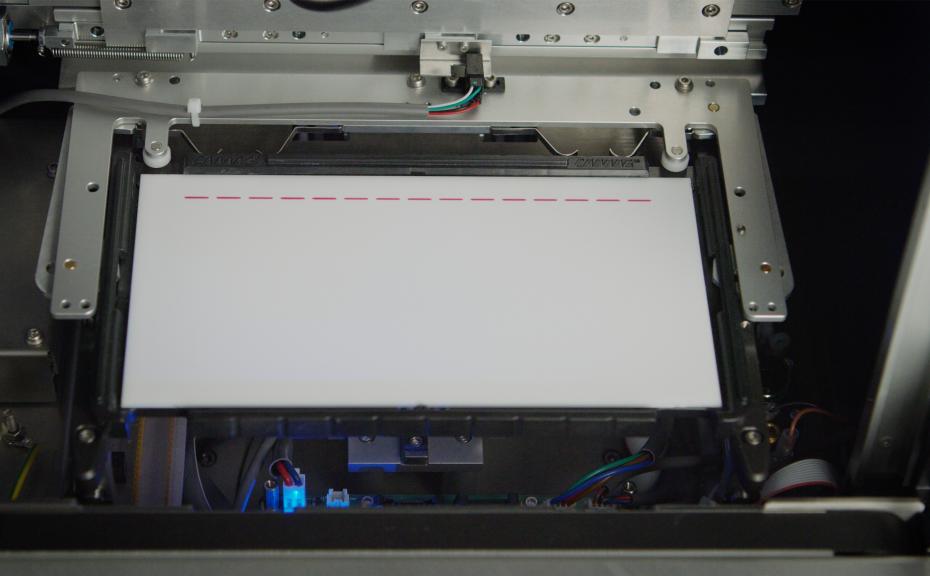
02
The plate containing the samples applied is ready to be loaded into the developing chamber.
-
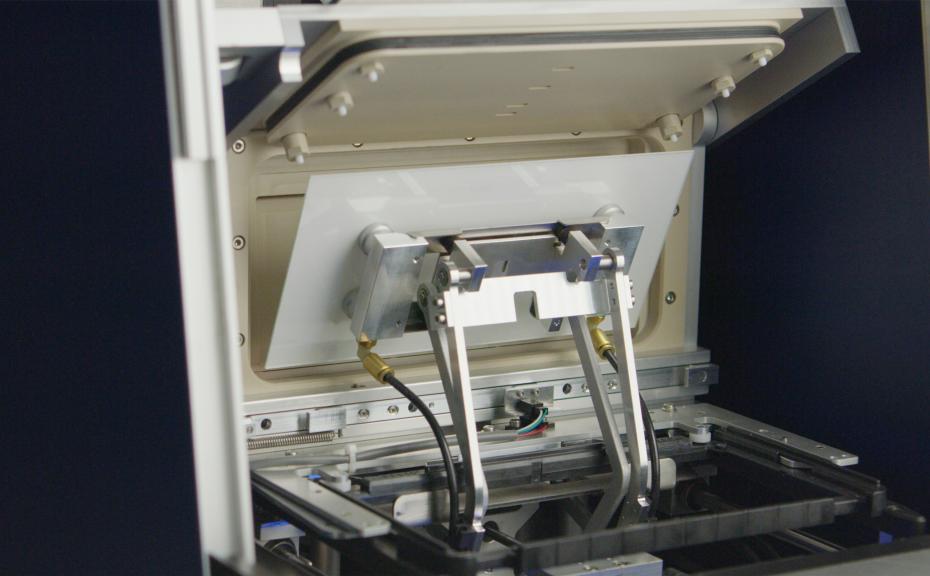
03
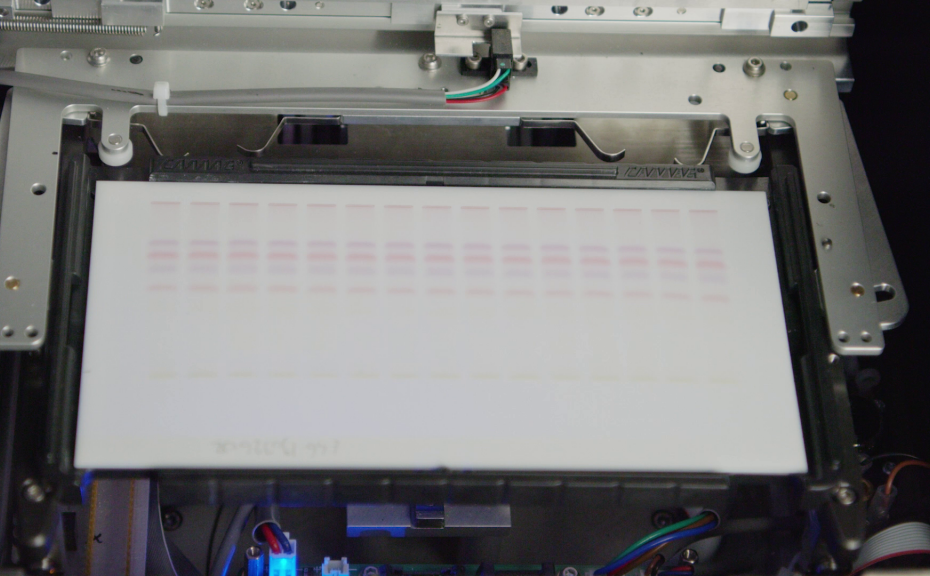
The tilting mechanism moves the plate from a horizontal to a vertical position into the developing chamber, where it is then developed according to the selected method.
-
04
After development and drying in the chamber, the plate is returned to a horizontal position, ready to be transferred from the Module DEVELOPMENT to other modules for further processing.
KEY benefits
-
Low chamber volume for better control of the gas phase
-
Fast activation and pre-conditioning of the stationary phase (due to active circulation of the gas phase)
-
Full control of the gas phase during development
-
Sensor-controlled constant volume of the developing solvent in the chamber during development
-
Significant time savings due to active gas phase handling
-
Optimized cleaning procedure between different developing solvents
-
User-independent reproducibility
HPTLC PRO Module DEVELOPMENT
Technical specifications
-
General data
-
Electrical data
-
Mechanical data

CAMAG® AMD 2 System Automated Multiple Development
CAMAG®
AMD 2 System
In a nutshell
high resolution, precision, and repeatability
The separation of complex samples is a challenging task for every chromatographic system, particularly when the sample components span a wide polarity range.
The AMD procedure offers an excellent solution as it allows stepwise gradient elution over increasing separation distances. As a result acids, bases, neutral, hydrophilic, and lipophilic substances can be separated in a single AMD run. This makes AMD suitable for a variety of applications.
The technique is frequently used in lipid analysis and in routine analysis of drinking water. Pigment formulations with a complex composition, resins as well as additives of mineral oil products are other typical applications of AMD analysis.
-
Automated multiple development
-
Stepwise gradient elution over increasing separation distances
-
Enhanced separation capacity
-
HPTLC glass plates (20 x 10 cm), only
-
Software-controlled with visionCATS
THE PRINCIPLE OF
THE AMD PROCEDURE
-
The HPTLC plate is developed repeatedly in the same direction
-
Each successive run extends over a longer solvent migration distance than the one before
-
Between runs, the solvent is completely removed from the developing chamber and the layer is dried under vacuum
-
Each successive run uses a solvent of lower elution strength than that of the one used before. In this way, a stepwise elution gradient is formed
-
The combination of focusing effect and gradient elution results in extremely narrow bands. Their typical peak width is about 1mm. This means that, with the available separation distance of 80mm, up to 40 components can be completely resolved, i.e with base line separation
-
With visionCATS the AMD 2 can be IQ/OQ qualified and used in a cGMP environment. Operated with the mentioned software, the AMD 2 supports compliance with 21 CFR Part 11.
The AMD 2, like other software-controlled CAMAG instruments, communicates with visionCATS. The gradient, made from up to 5 solvent bottles, is defined by input into a table in visionCATS. Gradient and solvent migration distance for each run can be shown graphically for verification. Then all individual runs of the developing program are performed fully automatic and monitored by visionCATS.
SEPARATION OF VARIOUS
RHUBARB SAMPLES BY AMD 2
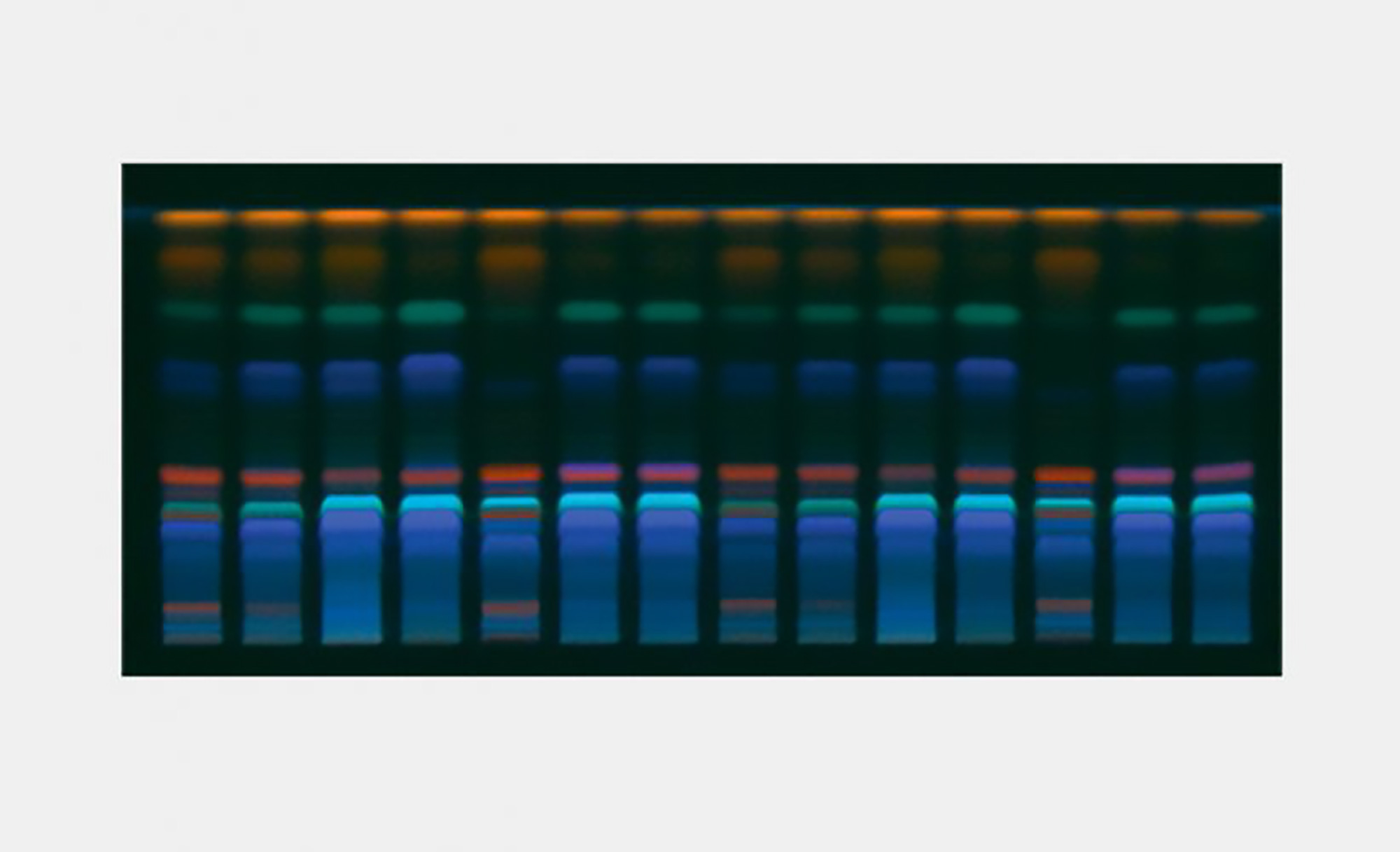
HPTLC chromatogram of rhubarb under UV 366 nm, derivatized with Natural Product reagent; AMD gradient in 10 steps: methanol – dichloromethane (40:60) to (10:90) in 9 steps, 40 mm solvent migration distance, then one isocratic step methanol – dichloromethane (10:90) over 70 mm solvent migration distance
Technical specifications
General data

CAMAG® Automatic Developing Chamber 3 (ADC 3)
CAMAG®
Automatic Developing Chamber 3
In a nutshell
the new standard for reproducible development
The CAMAG Automatic Development Chamber 3 (ADC 3) continues the proven reliability of its predecessor in High-Performance Thin-Layer Chromatography (HPTLC), offering consistent, fully automated plate development to support reproducibility and data integrity.
Designed for 20 x 10 cm HPTLC plates, the ADC 3 features an integrated Twin Trough Chamber that ensures stable analytical conditions and minimizes variability. It offers full flexibility in solvent selection and development parameters, supporting a wide range of applications.
All critical steps – saturation, activation, pre-conditioning, development, and drying – are fully automated to eliminate environmental influences and deliver reproducible results. The built-in humidity control enables chromatography at defined layer activity, essential for robust method development and for evaluating humidity effects.
Seamless integration with visionCATS software ensures compliance with cGMP/GLP and 21 CFR Part 11, making the ADC 3 a reliable choice for regulated laboratories that demand precision, traceability, and efficiency.
-
Fully automated chromatogram development
-
Integrated Twin Trough Chamber (20 x 10 cm)
-
Built-in humidity control for enhanced reproducibility
-
Software-controlled by visionCATS
-
Compliance with cGMP/GLP and 21 CFR Part 11
DESIGNED FOR THE LABORATORY
The ADC 3 simplifies lab work with efficiency, reliability, and flexibility. Whether you’re handling routine quality control or complex samples, it seamlessly adapts to your workflow. visionCATS HPTLC software allows you to define all parameters to meet your specific needs, offering complete control and full traceability.
-
Consistent Results Across Labs
The ADC 3 minimizes variability arising from both operators and laboratory environments, ensuring repeatable results every time.
-
Precision Through Automation
Fully automated plate handling and built-in system checks reduce user errors and improve reliability.
-
Increased Productivity
Automated plate development allows analysts to multitask during runs, improving overall workflow efficiency.
-
Regulatory Compliance
visionCATS integration enables secure parameter control, traceability, and data recording, supporting compliance with cGMP/GLP, and 21 CFR Part 11.
BUILT FOR THE USER
The ADC 3 is fully controlled via the visionCATS HPTLC software, enabling automated development with maximum reproducibility and compliance. Key parameters are precisely managed, including:
- Timing for chamber saturation, plate activation, pre-conditioning, and drying
- Solvent introduction during saturation, pre-conditioning, and development
- Monitoring of migration distance and development time
- Monitoring of temperature and relative humidity
Thanks to its intuitive interface, visionCATS guides users of all experience levels through setup and execution. Once all preparatory steps are complete, the system performs the development fully automatically under standardized conditions, allowing the user to focus on other tasks.
The entire process is continuously monitored and all data is recorded in accordance with cGMP/cGLP requirements. After development is complete, the plate is ready for the next process step of the HPTLC workflow.
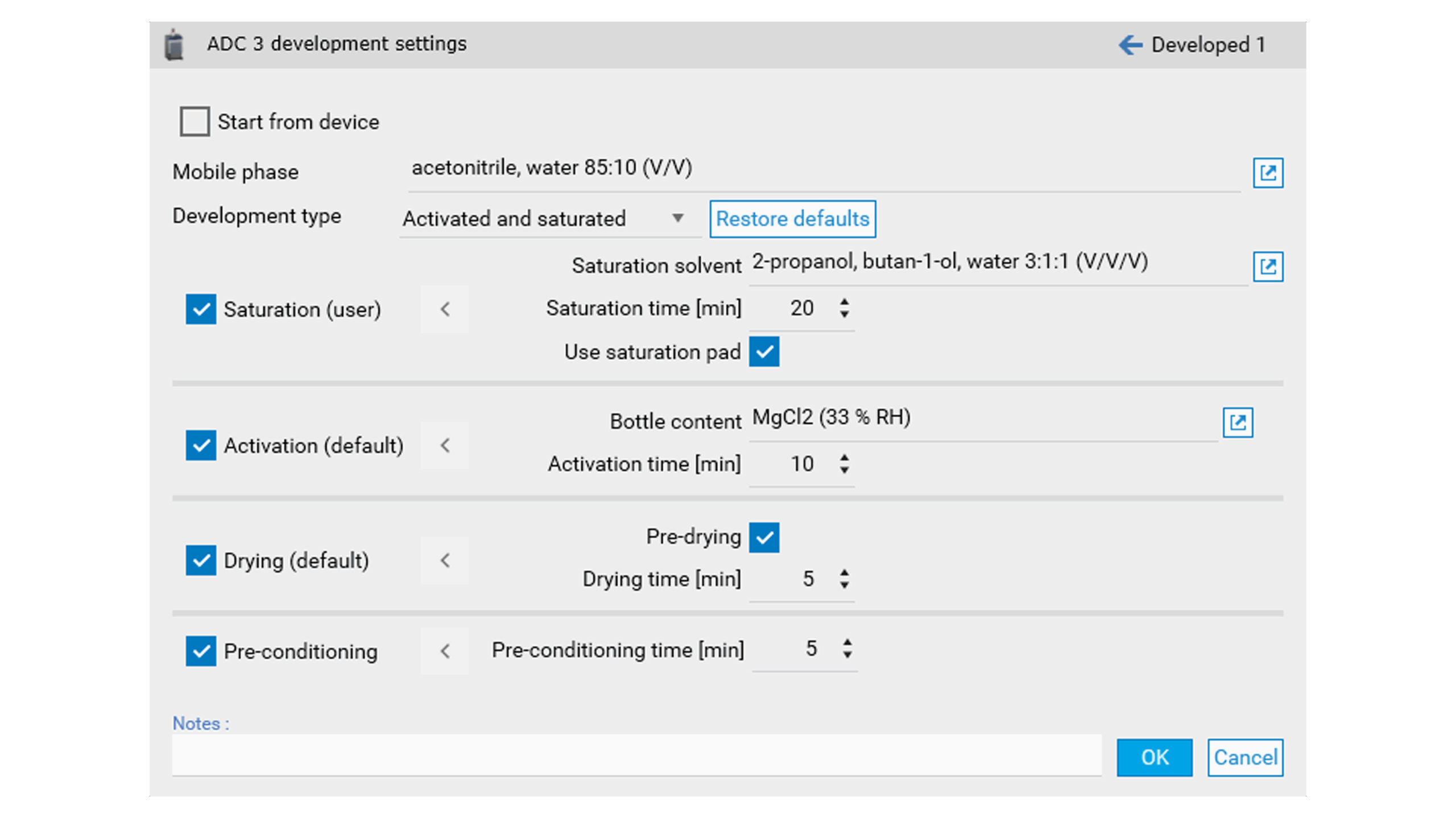
The development settings dialog provides user-friendly default configurations, with all parameters fully customizable to individual requirements.
HOW THE ADC 3 WORKS
-
Pre-drying
Removes residual solvents before development
After sample application, the plate is subjected to a controlled pre-drying process. A built-in blower operates for a defined duration, eliminating any remaining solvent from the stationary phase, ensuring optimal conditions for reproducible results.
-
Chamber Saturation
Establishes a stable solvent environment
Before development, the twin-trough chamber is saturated with solvent vapors to create a consistent internal atmosphere. This ensures uniform distribution of vapors across the plate. A saturation pad further enhances vapor dispersion, contributing to reliable chromatographic behavior.
-
Pre-conditioning
Equilibrates the stationary phase
During pre-conditioning, the dry stationary phase is exposed to solvent vapors in a controlled environment. Solvent molecules present in the gas phase interact with the surface of the stationary phase, leading to modification of its properties.
-
Plate Activation
Humidity control for reproducible performance
In most standardized methods, the plate is activated with air at a controlled relative humidity. Within a closed system, humidity is regulated using a saturated salt solution or molecular sieve.
-
Post-Development Drying
Prepares the plate for detection or evaluation
Once the development reaches the target migration distance, the plate is transferred to a drying unit. A controlled blower removes remaining mobile phase solvents, preparing the plate for the next analytical step.
-
Rinsing Procedure
Clean transition between solvent systems
When switching solvents, the system can be rinsed by adding solvent to the funnels. The glass tank can either be easily replaced with a clean one or cleaned and dried for reuse.
CONSISTENT RESULTS THROUGH CONTROLLED HUMIDITY
Chromatographic separation on HPTLC plates is affected by humidity, which can vary by season and location. The CAMAG® ADC 3 features a fully integrated humidity control, automatically regulating relative humidity around the plate. This enables both standardized and custom settings, ensuring reproducible results under changing environmental conditions.
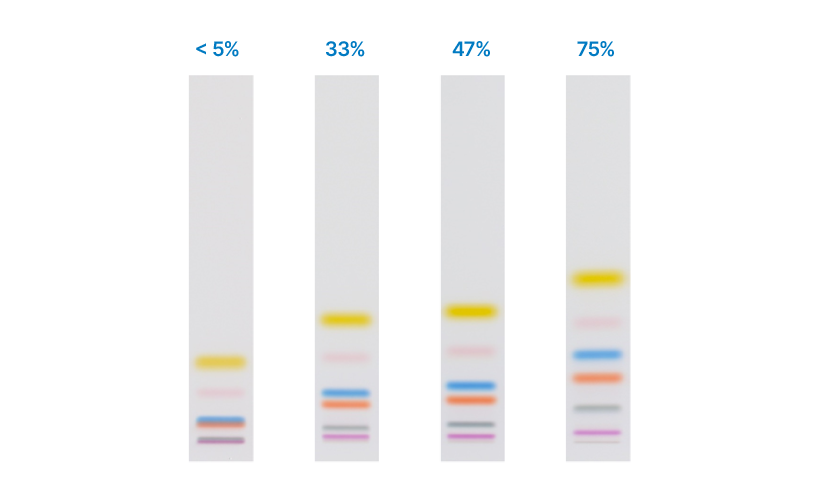
Humidity effect on test dye separation
Developing solvent: toluene
Technical specifications
-
General data
-
Electrical data
-
Mechanical data
what’s included
Ordering Information
Discover our comprehensive range of packages and make your selection today
Download
Related documents
Download manuals for in-depth device guidance
Related products
Find the most suitable instrument for your specific requirements
ARTICLES & PUBLICATIONS
Latest Publications on HPTLC

CAMAG® Automatic Developing Chamber 2 (ADC 2)
CAMAG® Automatic Developing Chamber 2
In a nutshell
the standard for reproducible results
Development is a critical step in HPTLC, and the ADC 2 ensures reproducible results by fully automating the development process and eliminating environmental influences. The ADC 2 precisely controls layer activity, chamber saturation, developing distance, and final drying, ensuring consistent chromatographic separations.
This advanced system offers two operational modes: standalone with parameter input via a keypad or software-controlled operation using visionCATS. The software mode provides enhanced process monitoring, parameter documentation, and detailed reporting, making the ADC 2 suitable for regulated environments.
Designed for compatibility with 20 x 10 cm Twin Trough Chambers, the ADC 2 maintains the conditions of established analytical procedures while minimizing operational variability. The optional Humidity Control feature enables chromatography at defined layer activity, critical for method development and studying the effects of relative humidity. Integration with visionCATS software supports compliance with cGMP/GLP requirements and 21 CFR Part 11, ensuring its suitability for highly regulated workflows.
-
Fully automated development
-
Development in 20 x 10 cm Twin Trough Chamber
-
HPTLC plates (20 x 10 cm)
-
Operation in stand-alone mode or software-controlled
-
Fully traceable operation
-
Option “Humidity Control” allows reproducible chromatography
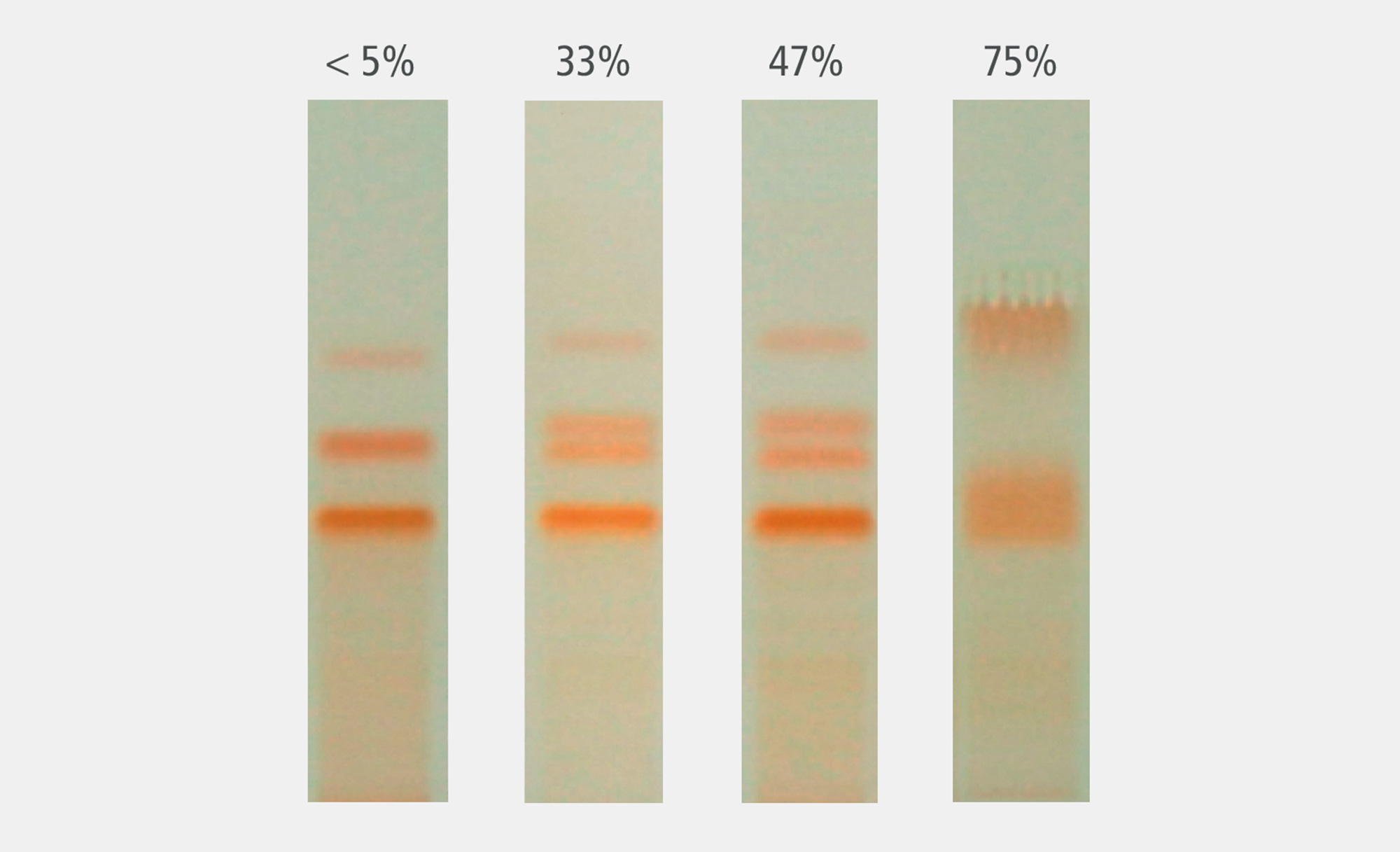
Example: ADC 2 SEPARATION OF POLYPHENOLS IN GREEN TEA
EFFECTS OF RELATIVE HUMIDITY
Developing solvent: toluene, acetone, formic acid 9:9:2 (v/v/v)
Derivatization: Fast Blue Salt B
Technical specifications
General data

CAMAG® Twin Trough Chamber
Twin Trough Chamber
In a nutshell
Consistent Results, Minimal Solvent Use
This is a classical developing tank for Thin-Layer Chromatography. Compared to a Flat Bottom Chamber less solvent is needed. A Twin Trough Chamber reduces disposal problems and allows preconditioning of the plate with any solvent and for any duration. For preconditioning or saturation the trough opposite to the plate is filled with developing solvent. The use of a saturation pad is recommended for a fast, homogeneous and reproducible chamber saturation process.
-
Glass tank with two troughs for manual development
-
Available for 20 x 10 cm, 20 x 20 cm, and 10 x 10 cm plates
-
Steel or glass lid

CAMAG® Flat Bottom Chamber
Flat Bottom Chamber
In a nutshell
NEW STANDARD OF REPRODUCIBILITY
This is a classical developing tank for Thin-Layer Chromatography. Compared to a Twin-Trough-Chamber more solvent is needed. Also a Twin-Trough-Chamber reduces disposal problems and allows preconditioning of the plate with any solvent and for any duration.
-
Glass tank with flat bottom for manual development
-
Available in the formats 20 x 20 cm and 10 x 10 cm
-
Steel or glass lid

CAMAG® Horizontal Developing Chamber
CAMAG®
Horizontal Developing Chamber
In a nutshell
Efficient Chromatography
In the Horizontal Developing Chambers, HPTLC plates can be developed from both opposing sides towards the middle. This permits the number of samples to be doubled as compared with development in a tank, provided the separation distance of 45 mm, i.e. 50 mm minus 5 mm distance from the edge, is sufficient. This chamber type is often used for screening purposes. The obtained chromatograms differ from those obtained with the same mobile phase system developed in vertical chambers.
-
Chamber for horizontal development
-
Available in the formats 20 x 10 cm and 10 x 10 cm
-
Development from both plate sides possible to double the number of samples
-
Development in sandwich or tank configuration
-
Low solvent consumption
HORIZONTAL DEVELOPING
CHAMBER SCHEME
-
HPTLC plate (layer facing down)
-
Glass plate for sandwich configuration
-
Reservoir for developing solvent
-
Glass strip
-
Cover plate
-
Conditioning tray
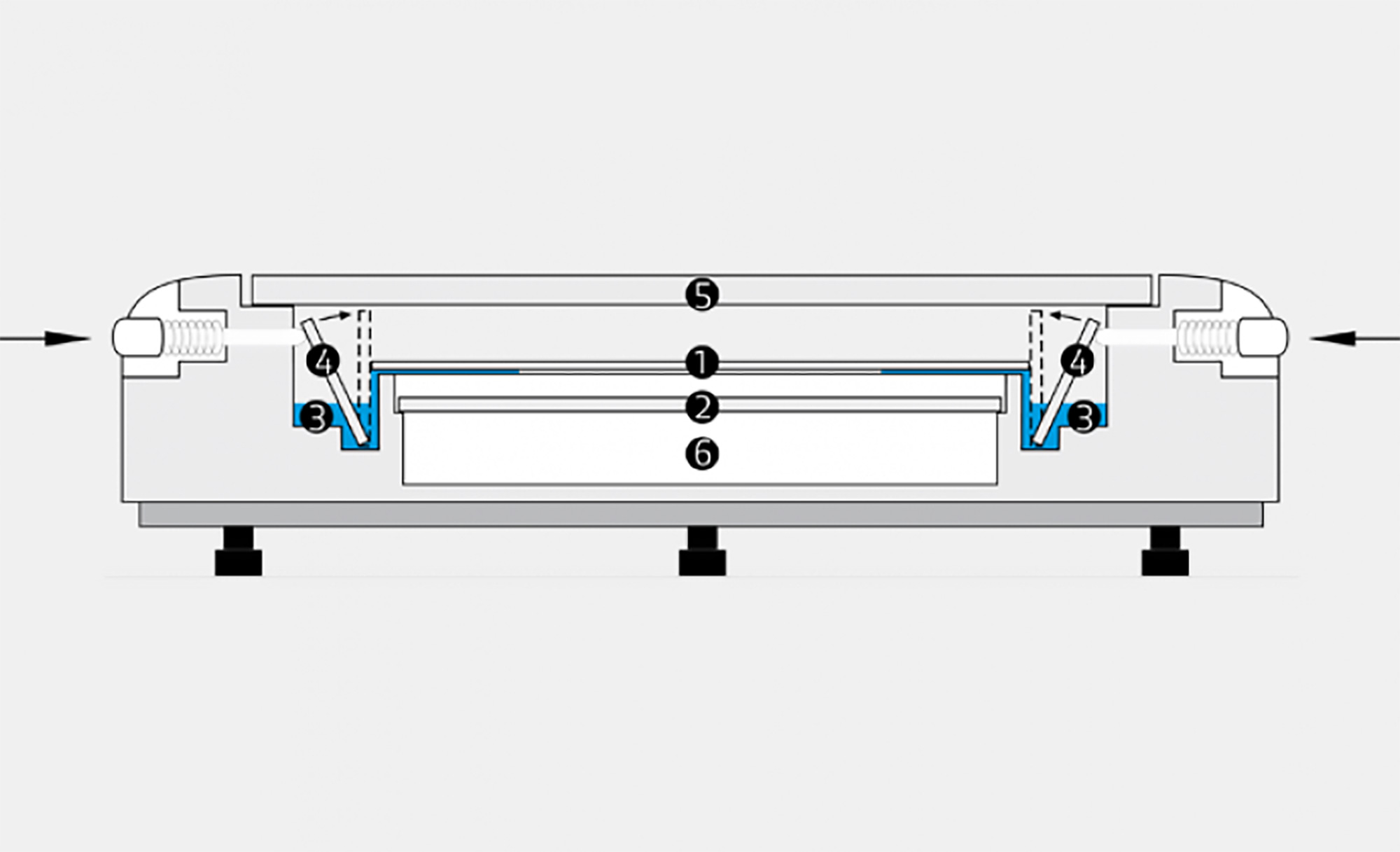
Horizontal Developing Chamber scheme

CAMAG® smartAlert
CAMAG®
smartAlert
In a nutshell
Smart Development Monitoring
The CAMAG® smartALERT is an innovative device designed to enhance the precision and reliability of chromatographic development processes. It monitors the solvent front during the development of TLC/HPTLC plates and alerts users with visual and audible signals when the front reaches the defined position.
This ensures accurate timing, prevents overdevelopment, and improves reproducibility in analyses. Compatible with glass chambers and plates in 20 x 20 cm, 20 x 10 cm, and 10 x 10 cm formats, the smartALERT is user-friendly, featuring simple one-button operation and multiple alarm tones. Battery-powered for convenience, it is an essential tool for optimizing laboratory workflows and maintaining high-quality chromatographic results.
-
Stops at set distance
-
Visual and audible alerts
-
Easy to operate
-
Compatible with standard chamber and plate formats
-
Four different alarm sounds
-
Runs on batteries